A Study To Assess The Knowledge And Practice Of Mothers Of Under Five Children Regarding First Aid Management Of Foreign Body Aspiration In Vazhayur Panchayath
Submitted by Jyothis Pious, Rini Raj. P, K. Sneha, Vaseem VC
Tags: child first aid pediatric

ABSTRACT
Foreign body aspiration (FBA) is a common pediatric emergency, particularly among children under five years of age, and can lead to life-threatening complications if not recognized and managed promptly. First aid plays a vital role in initial management, yet studies reveal that parental knowledge and practices are often inadequate. This descriptive cross-sectional study was conducted among 150 mothers of under-five children in Vazhayur Panchayath to assess their knowledge and practice regarding first aid management of FBA. The major Objectives were to assess their knowledge , practice and gap between knowledge and practice of mothers of under five children regarding the first aid management of foreign body aspiration . Data were collected using a structured questionnaire and checklist covering socio-demographic variables, knowledge of causes, symptoms, and management, as well as practical responses to choking incidents. The findings revealed that a majority (84.6%) of mothers had only an average level of knowledge, while 8% demonstrated poor knowledge and 7.3% good knowledge. Most participants belonged to the 26–30 years age group, with higher secondary education as the predominant qualification. The study found no significant association between socio-demographic variables such as occupation, type of family, and number of children with knowledge level, though number of under-five children and prior experience with FBA showed statistical significance. The results highlight a substantial knowledge gap, with limited preparedness among mothers to provide timely and effective first aid in FBA cases. The study concludes that targeted educational interventions, awareness campaigns, and training programs are essential to improve mothers’ knowledge and practices, thereby reducing morbidity and mortality among children. Future studies with larger, more diverse samples and inclusion of other caregivers are recommended to enhance generalizability and develop comprehensive preventive strategies.
Keywords: Knowledge, practice ,under five children, foreign body aspiration.
ACKNOWLEDGEMENT
With overwhelming hearty thanks and gratitude, the investigator submits their gratitude to the God Almighty. Without his presence, this would not have been possible. His grace, strength, love, care, courage and all those blessings are uncountable.
It is the pleasure and privilege of the investigator to record the deep sense of gratitude and sincere thanks to all those who have contributed to the successful completion of this endeavour.
With great appreciation and respect the investigators acknowledge Dr. Assuma Beevi T. M., R.N., R.M., Ph.D (N.), Dip. Med. Edn., CHPE., Cert. HRM., DHM., Dean, MIMS College of Nursing, Puthukkode for providing all the facilities, valuable advice and constant encouragement throughout this study.
The investigators extend their gratitude to Dr. Sheeja C V Principal, MIMS College of Nursing for providing such an encouragement and support for the study. The study has been done under the expert guidance of Ms. Nikhila Lakshmi , Assistant Professor, Department of Mental Health Nursing, MIMS College of Nursing for her valuable guidance, direction, constant encouragement, inspiration, expert ideas and advice throughout the course of the study.
The investigators express their sincere thanks to their class coordinator Mrs. Isha S , Professor, MIMS College of Nursing for her excellent guidance, scholarly suggestions, instant encouragement and inspiration for the successful completion of the study. The investigators express their sincere thanks to their research coordinator Mr Naseem
,Associate Professor , MIMS College of Nursing and all other faculty of MIMS College of Nursing for their support and encouragement throughout the study.
The investigators also express their deepest sense of gratitude to Mr Vasudevan Master, the honourable president of Vazhayur panchayath for permitting us to comduct the study.
The investigators play a special vote of thanks to Mr. Prathab, system administrator and Mr. Sreenish, Librarian, MIMS College of Nursing for their help in retrieval of information’s.
The investigators would like to express a word of appreciation to our classmates for their prompt suggestions and moral support. The investigators extend their warmest thanks to all those who helped them in the preparation of manuscript, general support and encouragement.
Finally, the researchers are highly indebted to their parents for their encouragement, untiring support and prayers that helped them undertake this endeavour successfully.
With heartfelt gratitude,
- Ms Rini Raj P
- Ms K Sneha
- Ms Jyothis Pious
- Mr Vaseem Aslam V C
TABLE OF CONTENTS
| CHAPTERS | TITLE | PAGE NO. |
| 1 | Introduction, Research Question, Aims & Objectives, Hypothesis, conceptual framework, Review of literature | 1-12 |
| 2 | Methodology, Results, Discussion | 13-33 |
| 3 | Limitations, Scope for future studies | 34 |
| 4 | Conclusions, Policy implications | 35 |
| 5 | Summary | 36 |
| 6 | Appendices | 37-38 |
| 7 | Appendices | 39-75 |
LIST OF TABLES
| SL NO. | TITLE | PAGE NO |
| 1 | Distribution of samples based on Age, Education, occupation | 18 |
| 2 | Distribution of sample based on type of family, number of children, number of under-five children, previous experience | 21 |
| 3 | Mean, median and standard deviation of socio-demographic data. | 24 |
| 4 | Mean, median and standard deviation of knowledge questionnaires | 25 |
| 5 | Distribution of samples by level of knowledge of mothers | 27 |
| 6 | Mean, median and standard deviation of practice checklist. | 28 |
| 7 | Association between knowledge of mothers with selected socio- demographic variables. |
29 |
| 8 | Association between practice of mothers with selected socio- demographic variables. |
30 |
LIST OF FIGURES
| SL NO. | TITLE | PAGE NO |
| 1 | Conceptual framework based on Pender’s Health Promotion Mode | 4 |
| 2 | Schematic presentation of the study | 14 |
| 3 | Distribution of samples based on age | 19 |
| 4 | Distribution of sample based on education | 20 |
| 5 | Distribution of sample based on type of family | 22 |
| 6 | Distribution of sample based on number of children | 23 |
LIST OF ANNEXURES
| SL NO. | TITLE | PAGE NO |
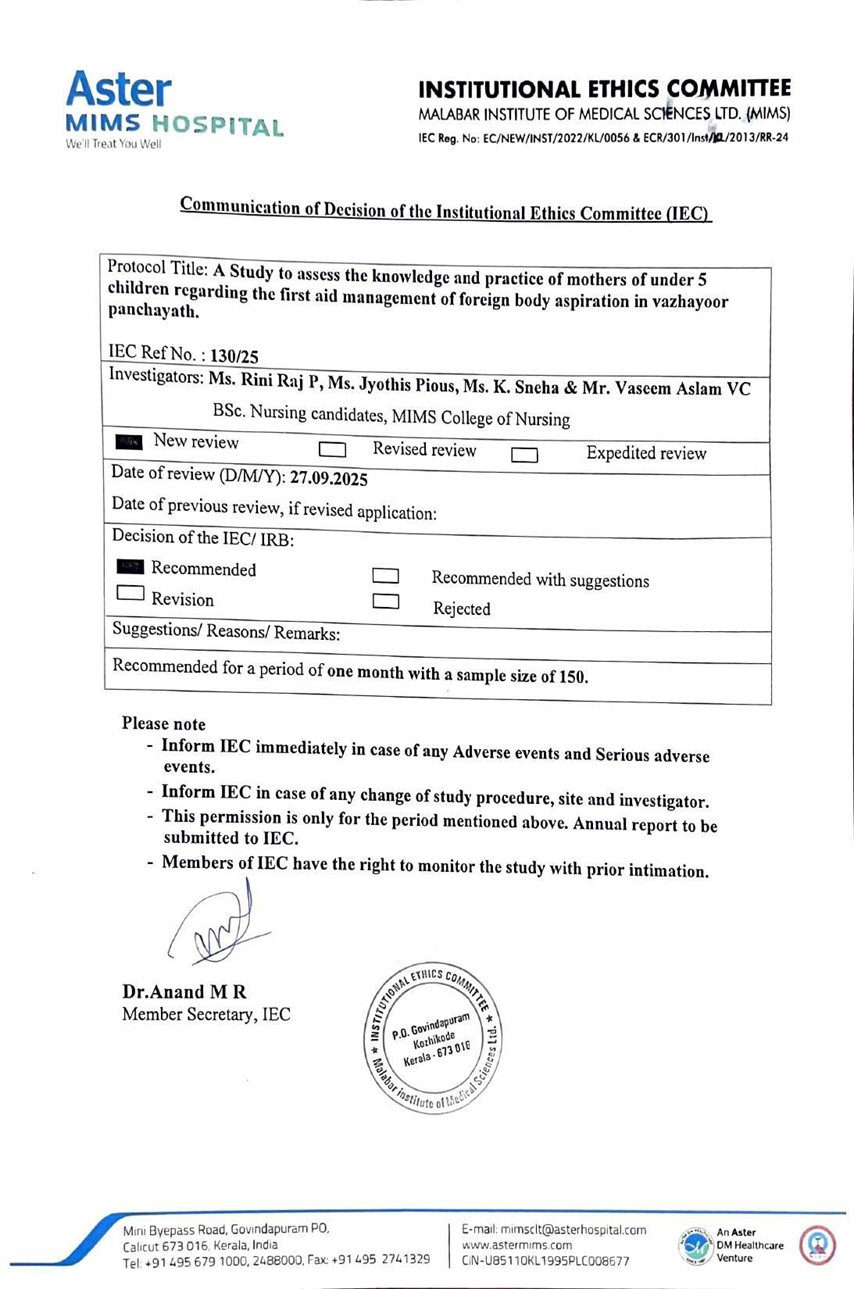
| A | Permission Letter From Institutional Ethics Committee | 39 |
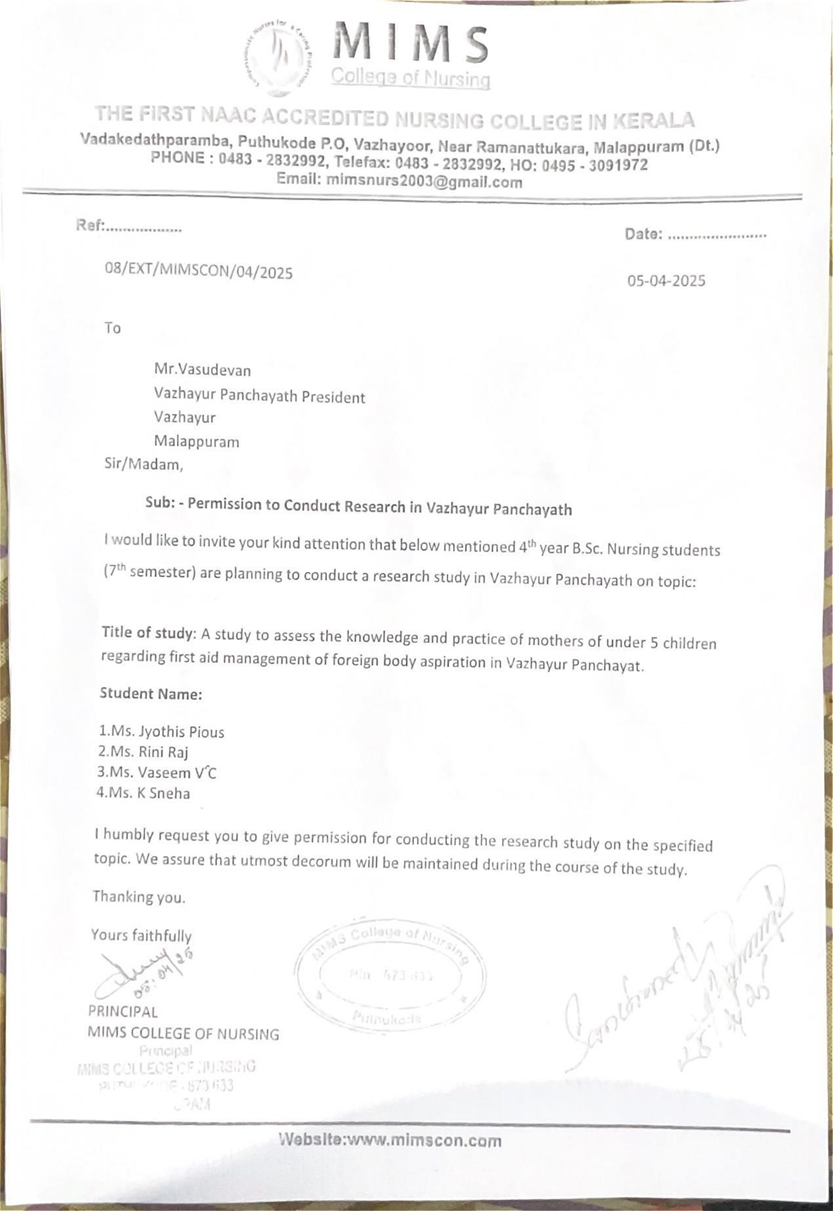
| B | Permission Letter From Vazhayur Panchayath | 40 |
| C | Request For Content Validation | 41 |
| D | Certificate Of Content Validity Of Data Collection Tool | 42 |
| E | List Of Experts For Content Validity | 43 |
| F | Participant Information Sheet [English] | 44 |
| G | Informed Consent [English] | 47 |
| H | Data Collection Tools[English] | 48 |
| I | Data Collection Tools[English] | 59 |
| J | Informed Consent [Malayalam] | 63 |
| K | Data Collection Tools [Malayalam] | 64 |
| L | Practice Checklist Malayalam | 71 |
| M | Health Education Foreign Body Aspiration | 73 |
LIST OF ABBREVIATIONS
FBA - FOREIGN BODY ASPIRATION
IBM - INTERNATIONAL BUSINESS MACHINES
MIMS - MALABAR INSTITUTE OF MEDICAL SCIENCE
CHAPTER 1
INTRODUCTION
Children are found fond of putting objects into various orifices, either their own or other’s due to curiosity and innocence, especially during the oral phase of psychosocial development and beyond. Objects inserted into the nose, ears, anus and vagina are usually easier to manage. However foreign bodies in the mouth can be particularly difficult and often life threatening, as they may enter the respiratory or alimentary tract1.
A foreign body is any object originating outside an organism’s body. In machinery, the term refers to any unwanted or intrusive objects. Foreign body aspiration occurs when a solid or liquid substance is inhaled into the respiratory tract2.
Foreign body aspiration is a potentially life-threatening emergency that occurs when an object is inhaled into the respiratory tract, leading to partial or complete airway obstruction. It is most common among children, particularly those under five years of age, but can also occur in adults, especially the elderly. The clinical presentation can range from sudden coughing and choking to severe respiratory distress and cyanosis, depending on the site and degree of obstruction. If not recognized and managed promptly, foreign body aspiration can result in hypoxia, asphyxia, or even death2.
Approximately, 80% of paediatric foreign body aspirations occur in children younger than five years old, with highest incidence between one and two years of age. At this stage most children can stand and move independently, often exploring their environment through oral exploration. They also have the fine motor skills to place small objects into their mouths but lack fully developed molars to chew food properly. Additionally, their swallowing mechanisms are still immature and uncoordinated, increasing the risk of aspiration. The most commonly aspirated foreign bodies include candies, coins, toy car wheels, beads, buttons and seeds3.
First aid plays a vital role in the initial management of FBA. Simple but effective interventions, such as back blows, abdominal thrusts (Heimlich maneuver), and chest thrusts, can help expel the foreign body and restore airway patency before professional medical care is available. Knowledge and timely application of these first aid measures by parents, teachers, caregivers, and the general public are crucial in reducing morbidity and mortality associated with foreign body aspiration4.
Parental knowledge and awareness regarding first aid measures for FBA plays a pivotal role in reducing complications and improving outcomes. However, studies indicate many parents lack knowledge and confidence in handling such emergencies, leading to delays or ineffective responses4.
Background of this study was a study conducted regarding the parental knowledge and practices related to foreign body aspiration in children in Makkah, Saudi Arabia. It was conducted among parents living in Makkah city and was done by Bassam M Bin Laswad et al. A total of 1087 parents were involved in the study. 63.9% were women and the majority were married. Moreover, 17.6% had an experience of child having aspirated a foreign body once. Furthermore, the parents had poor knowledge and practices related to FBA (65.4% and 78.6% respectively). In conclusion this study reported that parental levels of knowledge and practice of FBA were inadequate and there is a need to improve the awareness, which will lead to better outcomes1.
Need and significance of the study.
Foreign body aspiration is one of a medical emergency especially in under five children. Medical attention is required almost in all cases and with the help of first aid management we can easily dislodge the obstructing objects from body. Through this study it aims to provide education to mothers of under-five children3.
The current incidence of FBA varies globally, with some European countries reporting higher rates. Global incidence of FBA was 109.6 per 100,000. European countries with high incidence rates include Italy, Netherlands and Iceland3.
In India, most cases (77%) occur in children under two years old with a median age of 1.5 years old. The major symptoms were choking, stridor, paroxysmal cough and fast breathing. This may be life threatening to children. So, educating parents and care givers especially mothers was very pivotal3.
Statement of the problem
A study to assess the knowledge and practice of mothers of under five children regarding the first aid management of foreign body aspiration in Vazhayur Panchyath.
Research Question
What is the current level of knowledge among mothers of under five children regarding the first aid management of foreign body aspiration.
Aims
To assess the knowledge and practice of mothers regarding the first aid management of FBA
Objectives
- Assess the knowledge level of mothers of under-five children regarding first aid management of foreign body aspiration, including its causes, symptoms and its complication.
- Evaluate the practice of mothers in managing foreign body aspiration in children under five.
- Determine the association between knowledge of mother’s regarding first aid management of foreign body aspiration within the selected socio demographic variables.
- Determine the association between practice of mother’s regarding first aid management of foreign body aspiration within the selected demographic variables.
- To recommend interventions for improving awareness and first aid skills among mothers of under-five children.
Operational definitions
Knowledge: Refers to response to questions included in structured knowledge questionnaire regarding first aid management of FBA and measured in terms of knowledge score.: Method
Practice: where knowledge is gained through doing.
Mothers: Refers to persons who are having under five children.
Foreign body aspiration: Refers to the condition when an object is accidentally inhaled and becomes lodged in airways causing choking.
Assumptions
- Mothers are primary caregivers.
- Mothers have basic first aid knowledge.
- Socio demographic factors influence knowledge and practice.
- Education and awareness can improve knowledge and practice.
- Mothers are willing to participate and provide accurate information.
Hypothesis
- There will be statistically significant association between knowledge of mothers regarding first aid management of FBA with selected socio demographic variables.
- There is statistically significant association between practice of mothers regarding first aid management of FBA with selected socio demographic variables.
Conceptual/theoretical framework:
The conceptual framework presented is based on Pender’s Health Promotion Model (HPM), which explains how individual characteristics, cognitive-perceptual factors, and external influences affect health-promoting behaviour5. In this study, the framework has been adapted to focus on the knowledge and practice of mothers of under-five children regarding the first-aid management of foreign body aspiration (FBA). The framework highlights the dynamic relationship between personal characteristics, prior behaviours, cognition, interpersonal and situational influences, and the eventual behavioural outcomes6.
1. Individual Characteristics and Experience
At the foundation of this framework are the personal factors that shape a mother’s behaviour and decision-making in emergency situations such as foreign body aspiration. These include age, education, number of children, number of under-five children, type of family, and occupation. Each of these variables influences the likelihood of a mother acquiring, retaining, and applying first-aid knowledge5. For example, mothers with higher educational status may grasp health information more effectively, while mothers of multiple under-five children may have more exposure to emergency situations7.
Another critical component is prior related behaviour, which refers to the mother’s pre- existing knowledge or past experiences with first-aid management of foreign body aspiration. Prior exposure creates a baseline from which new learning and behaviour modification occur. If a mother already has some knowledge, she may more readily adopt correct practices, while those without prior experience may face greater challenges5.
2. Behaviour-Specific Cognition and Affect
This section represents the cognitive and emotional processes that directly influence mothers’ willingness and ability to take appropriate action. Several elements are included:
Perceived Benefits of Action: Mothers are more motivated to learn and apply first-aid measures when they understand the potential benefits, such as saving a child’s life and reducing complications. Improved knowledge regarding first-aid management is seen as a direct benefit7.
Perceived Self-Efficacy: This reflects a mother’s confidence in her ability to carry out the correct actions during an emergency. Higher self-efficacy leads to greater readiness to act. Through health education and practice, mothers can gain both the confidence and competence needed5.
Perceived Barriers of Action: Barriers such as lack of knowledge, limited support, or inadequate resources hinder effective action. Identifying and addressing these barriers is essential in promoting positive health behaviour5.
Interpersonal Influences (Norms and Support): Social support from healthcare professionals, peers, and mass media plays an important role. Mothers are more likely to follow recommended practices if such behaviours are encouraged and reinforced by others8.
Situational Influences: Availability of information through health magazines, mass media, and health education sessions by healthcare workers shapes mothers’ exposure and access to relevant knowledge8.
3. Behavioural Outcome
The aim of the framework is to achieve positive behavioural outcomes. This is represented by the commitment to plan for action, where mothers develop a positive attitude and willingness to perform first-aid measures in the event of foreign body aspiration. With improved knowledge reduced barriers, and increased self-efficacy, mothers are empowered to act promptly and effectively during emergencies.
An important component supporting this process is nursing action. Nurses play a vital role in assessing mothers’ baseline knowledge through structured questionnaires, providing targeted health education, and reinforcing correct practices. This intervention strengthens mothers’ commitment and helps ensure that improved knowledge translates into effective real-life actions5.
[ADD IMAGE - FLOW CHART]
REVIEW OF LITERATURE
Review of literature is one of the most important steps in the research process, it is an account of what is already known about a particular phenomenon. The main purpose of literature review is to convey to the reader about the work already done and knowledge and ideas that have been already established in a particular topic of research. For the present study finding of Review of literature has been organized in the following:
Parental Knowledge and Practices Related to Foreign Body Aspiration in Children in Makkah, Saudi Arabia, the study was conducted by Bassam M Bin Laswad Hawazen M Alsulaimani, Mohanned M Alomairi , Rola R Alsulami , Sultan F Alobaidi , Hazem Aljabri , Shahad T Alsaidi , Mohammed H Ageel . Foreign body aspiration (FBA) is a serious condition that can result in death, in addition to its significant association with social and economic outcomes. This condition occurs more often in children below the age of five years. FBA has a variable clinical presentation ranging from being asymptomatic to severe respiratory distress and death. Parents witnessing and reporting the incident of inhalation to a physician is helpful for early diagnosis and intervention. Furthermore, the late diagnosis of FBA can be associated with a high rate of mortality and morbidity. In fact, FBA has been reported to cause mortality in 7% of children less than or equal to three years of age. This cross-sectional study was carried out in October 2022 on the general population of Makkah, Saudi Arabia. They enrolled both male and female parents, both Saudi and non-Saudi, living in Makkah city. Participants had to be over 18 years and agree to participate. An online questionnaire was designed using Google Forms (Google LLC, Mountain View, California, United States) and distributed in October 2022 among parents living in Makkah city. After data collection, an appropriate statistical analysis was conducted. A total of 1087 parents enrolled in this study; 63.9% were women and the majority were married 93%. Additionally, 52% of the parents had at least three children. Moreover, 17.6% had an experience of a child having aspirated a foreign body once. The Internet was the most popular source of information on FBA (43.5%). Furthermore, the parents had poor levels of knowledge and practices related to FBA (65.4% and 78.6%, respectively)9.
Mothers' knowledge about foreign body aspiration in young children, conducted by Osamu Higuchi, Yuichi Adachi, Yoko S Adachi, Hiromichi Taneichi, Tomohiro Ichimaru and Kazuteru Kawasaki. An 8-item questionnaire regarding knowledge of FBA was developed and distributed at regular check-ups for children younger than 24 months old. Out of the 1766 questionnaires distributed, 1603 were recovered and most of them (1539) were answered by mothers. After omitting 49 questionnaires with incomplete data, 1490 questionnaires answered by mothers were analysed. Only 4.3% of mothers did not recognize a small toy as a cause of FBA, while 20.2% did not know that peanuts and other nuts can be causes of FBA, and 48.1% did not know that they should not give peanuts to a child younger than 3 years old. Regarding clinical signs, 27.7% and 41.8% of mothers did not know that sudden choking and sudden coughing were symptoms suggesting FBA, respectively. Being a mother with a child younger than 12 months old and being a mother with a first child were independent risk factors for lack of knowledge about FBA, regardless of the age of the mother. A substantial number of mothers lack knowledge regarding FBA.
To prevent FBA and to make timely diagnoses, parents, especially mothers with children younger than 12 months old and mothers with a first child should be given adequate information10.
Knowledge attitude and practice towards foreign body aspiration management among kindergarten teachers in south-west Amhara, rural Ethiopia was conducted by Kumlachew G Belete, Tadese Tamire, Amanuel Sisay, Mekuanint Asmare , Belayneh Dessie , Belete Muluadam , Abrehet Adamu ,Kaletsidk Dessalegn , Getachew A Yalew, Keder E Oumer . Aspiration of a foreign body (FB) is the act of unintentionally ingesting food, drink, or typically items. In every country on earth, it is the main cause of death. Aspirations of a foreign body in kids are typically emergency situations and account for a significant part of accidental fatalities. Problems are made worse by a lack of community understanding about foreign body aspiration. An institution-based cross- sectional study was undergone on kindergarten teachers. The result of this study showed that 78.4% of the participants had good knowledge or scored equal or more than the mean score. The total score of the attitude was calculated by rating the respondent’s correct-full responses on the attitude questions; a total of 337 (93.4%) answered all the six questions above the mean level of 5.98, indicating that 93.4% of the respondents have a positive attitude11.
Assessment of Knowledge, Attitude, and Practice Towards the First Aid Management of Foreign Body Aspiration and Obstruction among Parents of
Children Visited Sphmmc, Addis Ababa, Ethiopia. Conducted by Yohannes Hailu, Sisay Yifru. This study was conducted at St. Paul’s hospital millennium medical college. SPHMMC is established in 1961 G.C. as a medical college and is a tertiary hospital under federal minister of health Ethiopia. With over 2800 staff, it provides clinical and preclinical training and specialized services. The paediatrics department is a core area, providing outpatient and inpatient services and academic activities. The study was conducted from September 1, 2023, to October 30, 2023, GC. A descriptive- based cross-sectional study was carried out in the study area using pretested, structured, and self-administered questionnaires. The collected data was analysed using SPSS version 25. Multiple logistic regression analysis was used to identify factors associated with the Knowledge, attitude, and practice of parents towards first aid management of foreign body aspiration and obstruction. A total of 423 parents were involved in the study. Only 218 (51.5%) of them were knowledgeable. Most of the respondents (76.3%) had a positive attitude towards foreign body that foreign body aspiration needs immediate intervention, and 75 (17.7%) faced a child who aspirated foreign body. Of these, only 53 (70.7%) had provided first aid to the victim. Most of the respondents 40 (75.5%) had scored below 80% of practice towards foreign body aspiration and obstruction. Multiple Logistic Regression Analysis showed that parents who are literates were 3.6 times more knowledgeable than those illiterate12.
Parental awareness of the dangers of foreign body inhalation in children, conducted by Ines Begović, Iva Mihatov Štefanović, Renata Vrsalović, Goran Geber , Elvira Kereković , Tara Lučev , Tomislav Baudoin . This observational cross-sectional study was conducted by the departments of Otorhinolaryngology and Head and Neck Surgery and Paediatrics at a tertiary academic centre in the period from July 2020- until November 2021. The patients and the public were not involved in any way in the design, or conduct, or reporting, or dissemination plans of this research. The study included 352 participants –inclusion criteria were met if the parents of children < 5 years of age referred for clinical examination due to various indications were willing to provide written informed consent and fill out an anonymous questionnaire consisting of 14 questions designed to examine their current knowledge of the causes and symptoms of foreign body aspiration along with the correct course of action in the case that aspiration occurred (Supplemental material). The questionnaire also included questions regarding the age and the sex of both parents and their children in order to examine the existence of a correlation between these factors and the level of knowledge about the aspiration of foreign bodies. The results show that majority of parents know that inhaling a foreign body is a potentially life-threatening condition and recognize which objects have a potential to cause foreign body aspiration. 36.9% of respondents said they knew what the symptoms of foreign body aspiration were, however only 15.6% offered a complete answer. 59.6% of the respondents could not specify the right course of action in case FBA occurred. 2% responded accurately. No statistically significant correlation was found between the number of children in the family nor the age and the sex of the parents and the level of knowledge about the aspiration of foreign bodies13.
Awareness of the first aid management of foreign body aspiration among students: A cross-sectional study conducted by Khalid A Alshehri, Ahmed A Alharbi, Bassam E Yaghmoor, Anas K Salman, Shahad A Alaydarous, Lujain K Abdalwassie , Mahmoud H Mosli , Hani Z Marzouki . This observational cross-sectional study was conducted between December 2018 and March 2019 at Jeddah, Saudi Arabia via a paper-based questionnaire survey of male and female high school and middle school students. All the school students have been included in our study; each student had the opportunity to participate one time only. Categorical variables are presented as percentages, while continuous variables are presented as means ± standard deviation. The Chi-square test was used to compare frequencies, and the independent t-test was used to compare means. All statistical analyses were performed using SPSS Statistics version 22 (IBM Corp., Armonk, NY, USA). For all statistical tests, P = 0.05 or lower was considered as statistically significant. A total of 671 students participated in this survey. The second item, “It is possible for a child to choke on a small toy” had the highest rate of correct responses among both males and females (93.2% vs. 94%, respectively). The eighth item “Sudden cough is a sign of choking among children” had the lowest rate of correct responses among males (40.8%) and females (33%). Most female participants (74.2%) knew that batteries are the most dangerous items a child can swallow, which requires immediate medical attention (item 14), while only 56.2% of male participants knew that (P < 0.001). The only significant predictor on linear regression analysis was “Having treated anyone with FBA” (coefficient = −0.24, P = 0.03)14.
A descriptive-based cross-sectional study was conducted for Assessing the knowledge, attitude, and practice towards the first aid management of foreign body aspiration and obstruction among parents of children coming to St. Paul’s Hospital Millennium Medical College. It was done by Yohannes Hailu, Sisay Yifru. It was carried out in the study area using pretested, structured, and self-administered questionnaires. The collected data was analysed using SPSS version 25. Multiple logistic regression analysis was used to identify factors associated with the Knowledge, attitude, and practice of parents towards first aid management of foreign body aspiration and obstruction. Results shown that a total of 423 parents were involved in the study. Only 218 (51.5%) of them were knowledgeable. Most of the respondents (76.3%) had a positive attitude towards foreign body that foreign body aspiration needs immediate intervention, and 75 (17.7%) faced a child who aspirated foreign body. Of these, only 53 (70.7%) had provided first aid to the victim. Most of the respondents 40 (75.5%) had scored below 80% of practice towards foreign body aspiration and obstruction. Multiple Logistic Regression Analysis showed that parents who are literates were 3.6 times more knowledgeable than those illiterates. (AOR:3.612, 95% CI: 1.758, 7.420, P≤ 0.05). The level of knowledge and skills for providing first aid for foreign body aspiration, and obstruction in children among parents are low. So, education and increasing awareness among them to reduce morbidity and mortality in children suffering from aspiration and obstruction from foreign bodies has to be one of the strategies15.
Assessment of knowledge, attitude, and practice toward first aid management of choking hazards among Eastern Province Saudi adults: an observational study by Ashokkumar Thirunavukkarasu, Abdulrahman Raji Alanazi, Abdullah N AlRasheedi, Danah Khalid Alruwaili, Doaa Mazen Abdel-Salam, Nasser Saleh Alriwely , Abdulrahman Fayez J Alruwaili , Abdulhadi Abdullah Z Alanazi , Sultan Farhan O Alruwaili , Abdulaziz Raja R Alruwai. The present analytical study was carried out among 390 Saudi adults attending different primary health centres in the Eastern Province of Saudi Arabia. They used a standard and validated data research topic tool to assess knowledge, attitude, and practice. Spearman’s correlation was applied to determine the correlation between each section, while binomial logistic regression analysis was applied to identify the associated factors. They observed knowledge, attitude, and practice scores in 43.3, 38.9, and 36.4% of the participants, respectively. Furthermore, positive correlations between knowledge and attitude (rho = 0.42, p = 0.001), between knowledge and practice (rho = 0.57, p = 0.001), and between attitude and practice (rho = 0.41, p = 0.001) were revealed in our survey. The knowledge of the participants was significantly higher with the age group of 30– 40 years [adjusted odds ratio (AOR) = 3.67 (1.94–4.65), p = 0.001] and participants who received training in first aid management [AOR = 1.64 (1.12–2.49), p = 0.037]. This study found that males [AOR = 0.36 (0.21– 0.63), p = 0.001] and those working in the private sector [AOR = 0.61 (0.31–0.87), p = 0.018] had significantly lower attitudes16.
Assessment of Knowledge, Attitude, and Practice of First Aid Management of Choking Among Primary School Teachers in Riyadh, Saudi Arabia: A Cross-sectional Study by Mazyad M Alenezi, Zinab H Bohulaigah , Nader F Aldajani , Lamya G Alotaibi , Mthayel F Alshammari. They utilized a crosssectional study design. The study was conducted from the beginning of July till the end of October 2023 to assess the knowledge, attitude, and practice of first aid management of choking among primary school teachers. Their study included 447 participants assessed for first aid choking management. Most participants were female 338 (75.6%), aged 40-50 years 170 (38%), married 346 (77.4%), and Saudi 414 (92.6%), with varying educational backgrounds including diploma 97 (21.7%), bachelor's 268 (60.0%), and master's degrees 51 (11.4%). A significant portion had over 10 years of teaching experience 263 (58.8%)17. Parental knowledge and practices toward foreign body aspiration in children in the Al Qassim region of Saudi Arabia was conducted by Almutairi, Aisha T.1,; Alharbi, Fahad S.2 Foreign body aspiration (FBA) is a perilous condition with a high mortality rate, especially in children less than three years of age .They conducted a descriptive cross- sectional study among Saudi parents at AlQassim region, Saudi Arabia during the period between February 2020 and June 2020.A validated self-administered questionnaire containing 16 questions of knowledge and practices toward FBA was distributed online via various Social Media platforms. Correct answers were coded and scored. Participant responses were grouped based on their score level of knowledge and practices. They recruited 385 parents with a mean age of 35.4 (range: 19–59) years, and 59.2% were female and 40.8% were male. Parents with poor and good knowledge were 61.3% and 36.9% and those with poor and good practices were 55.3% and 44.7%, respectively. They found that parental knowledge and practices toward FBA were insufficient. Educated females with less children that heard about FBA influenced parental knowledge. Also, having no incidence of FBA among children and being aware about FBA led to a better impact in parental practices18.
Effectiveness of Video Assisted Teaching programme on knowledge regarding first aid management of foreign body aspiration among mothers of under-five children was conducted by Sree Vidhya. K.P., Siji. C.S., Nandini. M.Mothers, as a primary care giver must be aware of first aid management of foreign body aspiration and measures to prevent it. Hence, they conducted a study to assess the effectiveness of video assisted teaching programme on knowledge regarding first aid management of foreign body aspiration among mothers of under-five children in selected anganwadis under Nadathara Grama Panchayath, Thrissur. The r objectives of the study were to find out the relationship between level of knowledge with selected demographic variables of mothers regarding first aid management of foreign body aspiration. Quasi experimental one group pre-test post-test design was conducted among 30 mothers of under-five children. Samples were selected by using purposive sampling method from 2 anganwadis. Pre-test was conducted using structured knowledge questionnaire. It was followed by video assisted teaching of first aid management of foreign body aspiration with appropriate AV aids by the investigator. Post-test was done after 7 days, and the analysis shows that there is a significant increase in knowledge score of mothers regarding first aid management of foreign body aspiration. Also, the study findings revealed that there is no association between knowledge score of mothers with their selected demographic variables. Thus, the study concluded that the video assisted teaching regarding first aid management of foreign body aspiration was effective in improving the knowledge of mothers19.
Mothers’ Knowledge and Practices Regarding First Aids Management of Domestic Accidents among Under-Five Children in El- Beheira Governorate conducted byNahla SabryZedain 1 Abeer Abdel Aziz Madian2 Rehab Ibrahim Mostafa Radwan. - Domestic accidents are the most common cause of death in children under 5 years of age. First aid intervention can lower the disability and increase the chances of survival of the injured child. Most of these accidents are preventable through increase mothers ̛ awareness and improvements in the home environment. Aim of this study was to assess mothers' knowledge and practices regarding first aids management of domestic accidents among under-five children in El-Beheira governorate. a descriptive exploratory research design. was used. They conducted the study at the governmental primary health care centers in El-Beheira governorate. A structured interview schedule and home safety assessment sheet used to collect data. The mean age of studied mothers was (27.22±5.02.) and 45.1% of them had secondary education. The most reported source of information about first aid was mass media followed by relatives. Two fifths of the mothers had fair knowledge regarding first aid, while 51.7% of them had poor first aid measures. About mothers ̛ safety practices for prevention of domestic accidents 41.3% of the mothers reported fair safety practices. There was highly significance relation between mothers' knowledge and practices regarding first aid and their age, education and occupation. There was highly significant relation between mother's safety practices and education, marital status, family monthly income. The study concluded that the reported first aid practices among studied mothers weren't satisfactory particularly regarding drowning, foreign body aspiration. However, they had fair knowledge regarding first aid measures20.
CHAPTER 2 METHODOLOGY
Research Approach
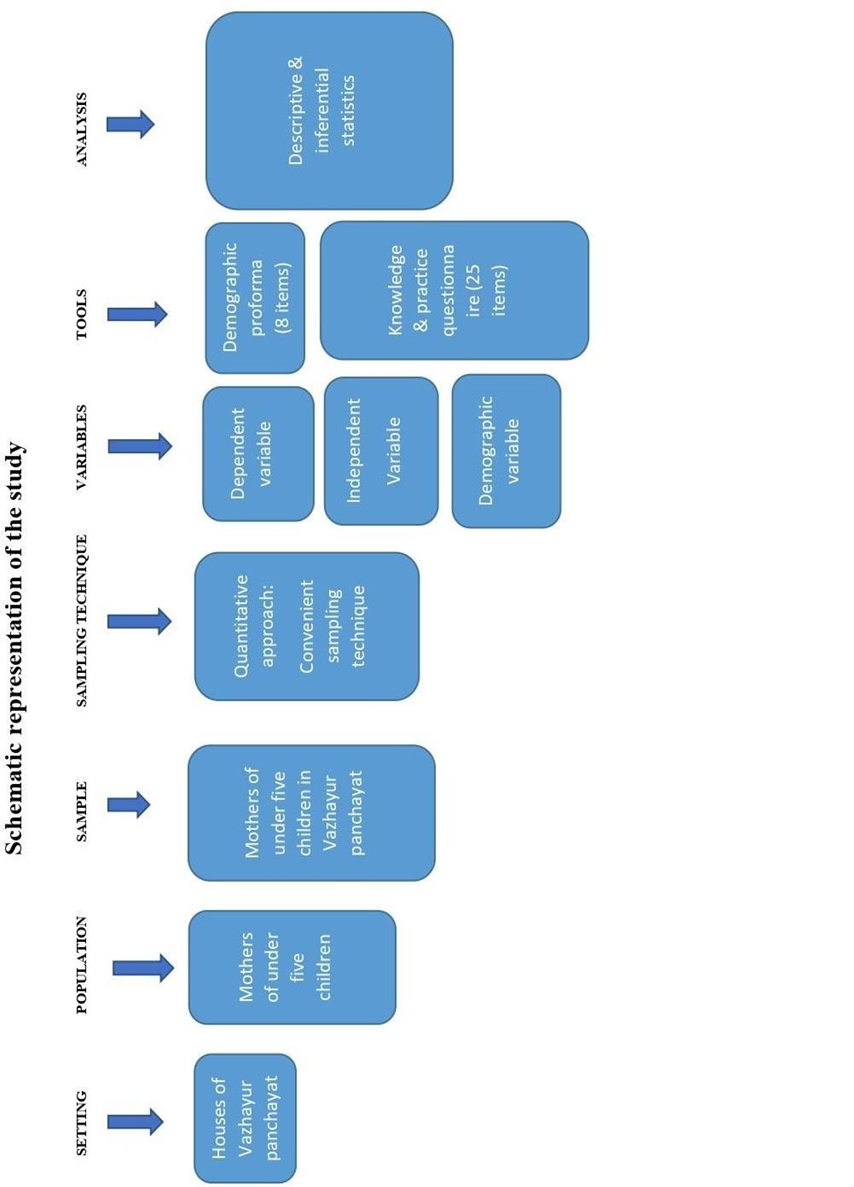
In this study quantitative research approach is used to assess the knowledge and practice of mothers of under five children in Vazhayur Panchayath.
Research design
Descriptive research design is used.
Variables
Variables are anything that how quality and quantity varies. In other words, variables are qualities, properties or characteristics of person, things or situations that change or vary. Chinn and Kramer sates that variables are concepts at different levels of abstraction that concisely defined to promote their measurement or manipulation within the study.
Dependent Variable: Knowledge and practice of mothers regarding foreign body aspiration.
Independent Variable: Health education and previous experience are the independent variables used in the study.
Demographic Variable: It includes age, education, socioeconomic status, and marital status, number of children, residence, occupation, family income and previous knowledge regarding first aid management of foreign body aspiration.
Setting of the study
Setting of the study is the location or physical condition in which study is taking place.It is selected based on availability of sample. The study is planned to conduct in houses of Vazhayur Panchayath
Population
The entire set of individuals or objects having some common characteristics selected for a study and sometimes referred to as universe of the study.
Target Population: Mothers of under five children
Accessible Population: Mothers of under five children in Vazhayur Panchayath
Inclusion criteria
- Mothers who have under five children
- Mothers who are available at the time of data collection.
- Mothers who are cooperative for the study.
Exclusion criteria
- Mothers who are not cooperative.
Sample and sampling technique
Sample: Sample is a small population selected for study. The sample comprises of 150 under five mothers who resides at Vazhayur Panchayath
Sampling Technique: Convenient sampling technique is used to collect sample. It is easiest, cheapest and least time consuming. In addition, this technique is also useful in documenting a particular quality of substance or phenomenon that occurs within a given sample.
Tool/Instruments
Self-prepared questionnaire is used as tool for assessing the knowledge and practice of mothers.
Development/selection of the tool
It encompasses the steps for creating a new tool or choosing an existing one in a research.
The following steps were taken for selection and development of research tool.
- Review of research and non-research literature was made in the related areas.
- Professional experience of the investigations with the guidance from the experts were helpful to develop the tool.
Description of the tool
Selected tool for the study is self-prepared questionnaire regarding the knowledge and practice of mothers of under five children about the first aid management of foreign body aspiration. The tool consists of two sections: Section A and Section B.
TOOL 1: SOCIO-DEMOGRAPHIC PERFORMA
Tool 1 consists of demographic variables such as age, education, occupation, religion, type of family, number of children, number of under five children and the previous knowledge regarding first aid management of foreign body aspiration.
TOOL 2: KNOWLEDGE QUESTIONNAIRE
This tool consists of 25 questions which assess the knowledge and practice related to first aid management of foreign body aspiration. The questions are about the causes, clinical features or signs and symptoms and first aid management of foreign body aspiration.
The questionnaire consists of 25 multiple choice questions with one correct answer and distracters for each question each correct answer has 1 score and 0 score for wrong answer. Based on the score knowledge is characterised as
0 –9 (POOR KNOWLEDGE)
10 –18(AVERAGE KNOWLEDGE)
19 –25(GOOD KNOWLEDGE) TOOL 3: PRACTICE CHECKLIST
This tool consists of 15 key points to assess the practice level of mothers of under-five children.
Content validity
To ensure the content validity the tools were given to 5 nursing experts. As per expert suggestions modifications were incorporated, few questions were deleted, and few questions were included in the questionnaire. Finalized the tool by consultation with the guide.
Reliability of the tool:
Reliability of the sociodemographic proforma is not applicable here because it only collects background information and does not measure the construct. The reliability of the knowledge questionnaire is established by internal consistency and reliability of practice checklist by inter-rater reliability since it is based on observation.
Pilot study
After obtaining permission a pilot study was conducted among 10 selected under 5 mothers from Vazhayur panchayat on 23-06-25. Data were collected by using proposed tools. The main objectives were to assess the feasibility of the study. Pilot study revealed that the tools used in the study were simple, clear and unambiguous. The data collected were amenable for statistical analysis.
Data collection process
After getting the approval of institutional review board, permission to conduct the study was obtained from the president of Vazhayur panchayath and gained the approval from IEC. The main study was conducted for 2 weeks period from 24-06-25 to 5-07-25 among under five mothers in Vazhayur panchayath, who met the inclusion and exclusion criteria. After explaining the purpose of the study, informed consent was taken from the samples and selected 150 samples by purposive sampling technique. The demographic data was obtained by using sociodemographic proforma, knowledge was assessed by using questionnaire and practice by checklist. The data were collected, organised and subjected to analysis.
Plan for data analysis
The plan was formulated with expert help. The data were analysed by:
# Sample characteristics: frequency and percentage.
# Mean, median and standard deviation.
#knowledge of mothers on first aid management of foreign body aspiration of under five children.
#Association between the mothers’ knowledge and practice regarding the first aid management of foreign body aspiration with selected sociodemographic variables.
Section wise presentation of data:
SECTION 1:
Table-1: Frequency and percentage distribution of sociodemographic characteristics of mothers of under-five children. (Age in years, education, occupation.
n= 150
| Sociodemographic characteristics | frequency | percentage |
| 1) AGE IN YEARS | ||
| 20-25yrs | 47 | 31.1% |
| 26-30yrs | 67 | 44.4% |
| 31-35yrs | 24 | 15.9% |
| >36yrs | 12 | 7.9% |
| 2) EDUCATION | ||
| Primary | 9 | 6% |
| SSLC | 17 | 11.3% |
| HSS | 68 | 45% |
| UG& PG | 56 | 37.1% |
| 3) OCCUPATION | 99 | 65.6% |
| Housewife | 35 | 23.2% |
| Private job | 11 | 7.3% |
| Government job others | 5 | 3.3% |
Table 1 shows that most (44.4%) of the subjects belongs to age group 26-30 years, 31.1% subjects are in 20-25 years, 15.9% are in 31-35 years and 7.9% of subjects are >36 years. Majority (45%) have completed higher secondary education while 6% have only primary education, 11.3% completed SSLC and 37.1% is graduate and postgraduate.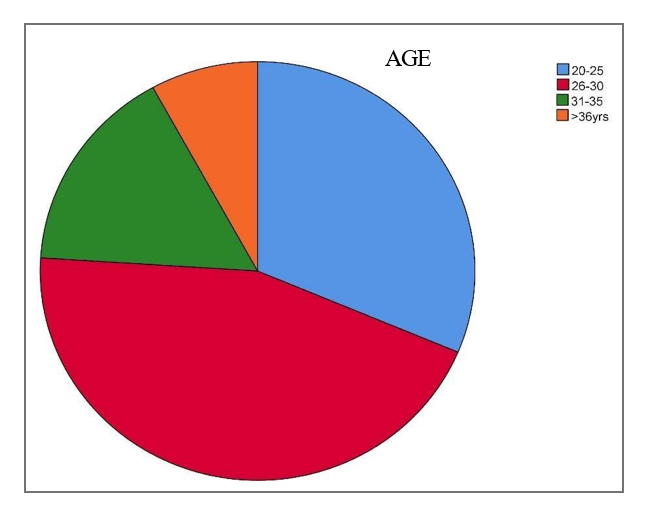
The above pie chart shows that most (44.4%) of the subjects belongs to age group 26- 30 years, 31.1% subjects are in 20-25 years, 15.9% are in 31-35 years and 7.9% of subjects are >36 years.
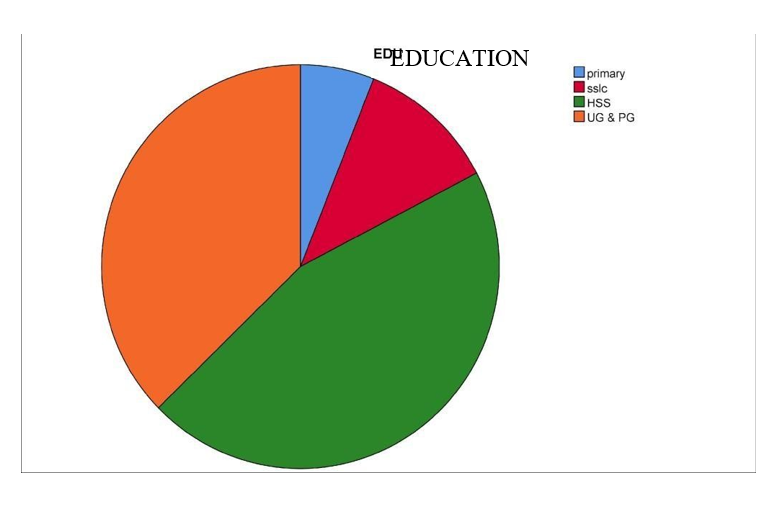
The above pie chat shows that majority (45%) have completed higher secondary education while 6% have only primary education, 11.3% completed SSLC and 37.1% is graduate and postgraduate.
Table-2: Frequency and percentage distribution of sociodemographic characteristics of under-five mothers. (Type of family, number of children, number of under-five children and previous experience of foreign body aspiration)
n=150
| SOCIODEMOGRAPHIC CHARACTERISTICS | FREQUENCY | PERCENTAGE |
|
4) TYPE OF FAMILY |
||
|
Nuclear Joint extended |
72 |
47.7% |
|
73 |
48.3% |
|
| 5 | 3.3% | |
| 5) NUMBER OF CHILDREN | ||
|
1 |
67 |
44.4% |
|
2 |
59 |
39.1% |
|
3 |
21 |
13.9% |
|
>3 |
2 | 1.3% |
| 6) NUMBER OF UNDER-FIVE CHILDREN | ||
|
1 |
124 |
82.1% |
|
2 |
25 |
16.6% |
|
3 |
1 | 7% |
| 7) PREVIOUS EXPERIENCE | ||
| Yes | ||
| No | 3 | 2% |
| 147 | 97.4% |
Table 2 shows that most (48.3%) of the subjects belong to joint family, 47.7% belongs to nuclear family and 3.3% belongs to extended family. Majority of the subjects have only a single child (44.4%), 39.1% have 2 children, 13.9% have 3 children and 1.3% have >3 children. Most of the subjects (82.1%) have only 1 under-five children, 16.6% have only 2 under-five children and only 7% have 3 under-five children. Among these subjects most of them (97.4%) do not have any previous experience of foreign body aspiration and only 2% have experience of foreign body aspiration.
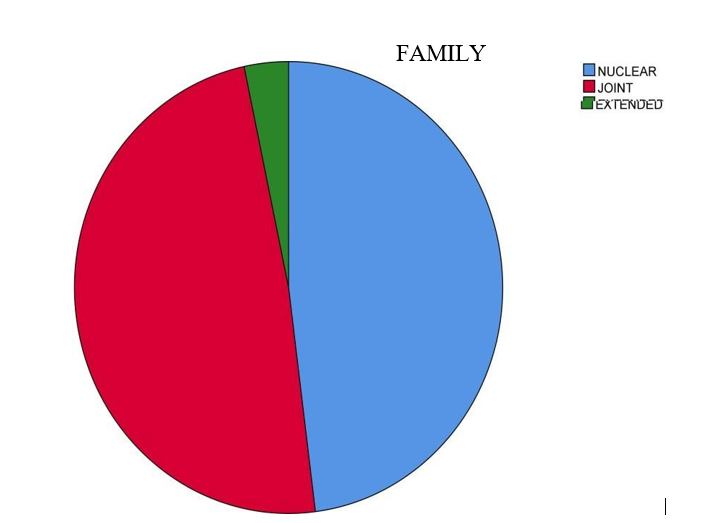
The figure shows, that most (48.3%) of the subjects belong to joint family, 47.7% belongs to nuclear family and 3.3% belongs to extended family.
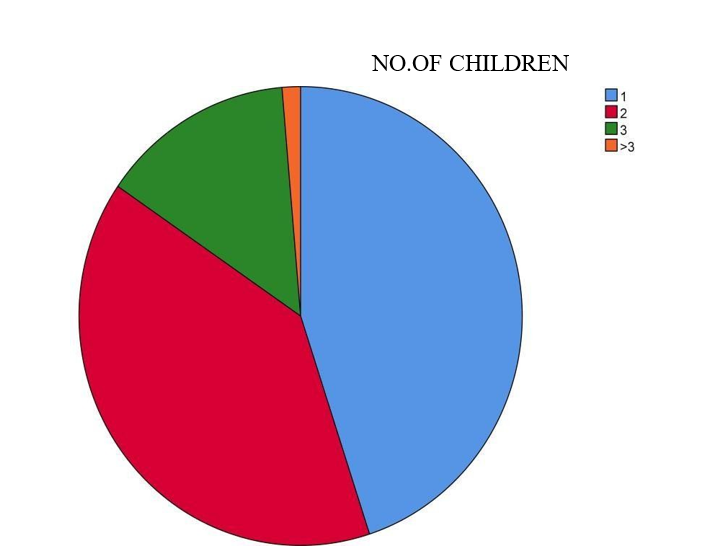
The figure shows, majority of the subjects have only a single child (44.4%), 39.1% have 2 children, 13.9% have 3 children and 1.3% have >3 children.
Table 3: Mean, median and standard deviation of sociodemographic variables.
| VARIABLES | MEAN | MEDIAN | STANDARD DEVIATION |
| Age in years | 2.01 | 2.00 | 0.894 |
| Education | 3.14 | 3.00 | 0.844 |
| Occupation | 1.48 | 1.00 | 0.775 |
| Family | 1.55 | 2.00 | 0.562 |
| Number of children | 1.72 | 2.00 | 0.754 |
| Number of under-five children | 1.18 | 1.00 | 0.403 |
| Previous experiences | 1.98 | 2.00 | 0.140 |
The table shows mean, median, and standard deviation for sociodemographic variables. Average age is around 2.01 (mean = median = 2), with moderate variability (SD = 0.894). Average education level is 3.14 (median = 3), with moderate variability (SD = 0.844). Average occupation level is low (mean = 1.48, median = 1), with moderate variability (SD = 0.775). Average family-related value is 1.55 (median = 2), with low variability (SD = 0.562). Average number of children is 1.72 (median = 2), with moderate variability (SD = 0.754). Average number of under-five children is low (mean
= 1.18, median = 1), with low variability (SD = 0.403).
Table 4: Mean, median and standard deviation of knowledge questionnaire to assess the knowledge of mothers of under-five children.
|
VARIABLE |
MEAN |
MEDIAN |
STANDARD DEVIATION |
|
KQ1 |
1.80 |
1 |
0.904 |
|
KQ2 |
2.00 |
1.00 |
0.889 |
|
KQ3 |
2.00 |
2.00 |
0.844 |
|
KQ4 |
1.00 |
1.00 |
0.775 |
|
KQ5 |
2.00 |
2.00 |
0.762 |
|
KQ6 |
1.00 |
1.00 |
0.754 |
|
KQ7 |
1.00 |
1.00 |
0.603 |
|
KQ8 |
1.00 |
1.00 |
0.753 |
|
KQ9 |
1.00 |
1.00 |
0.671 |
|
KQ10 |
1.00 |
1.00 |
0.633 |
|
KQ11 |
0.00 |
0.00 |
0.631 |
|
KQ12 |
1.00 |
1.00 |
0.394 |
|
KQ13 |
0.00 |
0.00 |
0.631 |
|
KQ14 |
0.00 |
1.00 |
0.573 |
|
KQ15 |
1.00 |
1.00 |
0.501 |
|
KQ16 |
1.00 |
1.00 |
0.501 |
|
KQ17 |
1.00 |
1.00 |
0.499 |
|
KQ18 |
1.00 |
0.00 |
0.499 |
|
KQ19 |
0.00 |
1.00 |
0.457 |
|
KQ20 |
1.00 |
1.00 |
0.495 |
|
KQ21 |
1.00 |
1.00 |
0.444 |
|
KQ22 |
1.00 |
1.00 |
0.501 |
|
KQ23 |
1.00 |
1.00 |
0.501 |
|
KQ24 |
1.00 |
1.00 |
0.499 |
|
KQ25 |
1.00 |
1.00 |
0.396 |
Table 4 shows Items KQ4, KQ6, KQ7, KQ8, KQ9, KQ10, KQ12, KQ15, KQ16, KQ17, KQ20- KQ24 have a Median of 1.00. A median of 1.00 means that at least half of the respondents scored 1.00 or higher. Every respondent scored the minimum possible value (0.00) for KQ11 and KQ13. This implies a complete lack of knowledge or consensus on the lowest possible score for these two questionnaire items. Items KQ14 and KQ19 has a Mean of 0.00 and a Median of 1.00.
The Standard Deviation is highest for KQ1 (0.904) and KQ2 (0.889), and generally high (around 0.75 to 0.90) for the initial items (KQ1-KQ6), indicating greater spread or variance in the responses for these items. The Standard Deviation is lowest for KQ11 (0.00) and KQ13 (0.00), which is expected since the Mean and Median are also 0.00, meaning no variability— everyone scored the same minimum value.
For the items with the highest means (e.g., KQ20-KQ24), the Standard Deviation is low (around 0.40 to 0.50), indicating less variability and a more consistent tendency toward the high score.
The population generally demonstrated good knowledge on most questionnaire items, but displayed complete lack of knowledge for items KQ11 and KQ13. There was also higher disagreement/variance in the responses for the earliest items (KQ1-KQ6).
Table 5: mean median and standard deviation of practice checklist to evaluate the practice of first aid management of chocking in mothers of under-five mothers.
|
VARIABLES |
MEAN |
MEDIAN |
STANDARD DEVIATION |
|
PC1 |
0.85 |
1 |
0.396 |
|
PC2 |
0.06 |
0.00 |
0.238 |
|
PC3 |
0.10 |
0.00 |
0.301 |
|
PC4 |
0.06 |
0.00 |
0.238 |
|
PC5 |
0.17 |
0.00 |
0.374 |
|
PC6 |
0.04 |
0.00 |
0.197 |
|
PC7 |
0.12 |
0.00 |
0.326 |
|
PC8 |
0.02 |
0.00 |
0.140 |
|
PC9 |
0.02 |
0.00 |
0.140 |
|
PC10 |
0.01 |
0.00 |
0.115 |
|
PC11 |
0.04 |
0.00 |
0.197 |
|
PC12 |
0.03 |
0.00 |
0.162 |
|
PC13 |
0.01 |
0.00 |
0.115 |
|
PC14 |
0.01 |
0.00 |
0.180 |
|
PC15 |
0.01 |
0.00 |
0.115 |
Table 5 shows that atleast half of the participants scored 0 for the practice checklist. Highest Mean (0.85) and Median (1.00): This suggests that PC1(verify if the newborn is chocking by checking to see if the newborn is crying or coughing forcefully) is utilized or scored much higher than any other checklist. The Median of 1.00 implies that more than half of the observations/participants scored 1 or higher on this checklist. Highest Standard Deviation (0.396), This indicates that the scores for PC1 have the greatest spread or variability compared to the other checklists. Highest Mean (0.85) and Median (1.00): This suggests that PC1 is utilized or scored much higher than any other checklist. The Median of 1.00 implies that more than half of the observations/participants scored 1 or higher on this checklist.
SECTION 2:
Table 6: distribution of sample by the level of knowledge of mothers regarding the first aid management of foreign body aspiration of under five children. n=150
|
GOOD |
11 |
|
AVERAGE |
127 |
|
POOR |
12 |
Table 6 shows that majority (84.6%) of the mothers have average level of knowledge, 8% have poor knowledge level and 7.3% have good knowledge.
SECTION 3:
Table 7: Association between the knowledge of mothers of under-five children regarding the first aid management of foreign body aspiration with sociodemographic variables.
| SL NO. | SOCIODEMOGRAPHIC CHARACTERISTICS | CHIE SQUARE | P VALUE | DF | TABLE VALUE |
| 1 |
AGE IN YEARS |
6.394 |
0.380 |
6 |
12.592 |
| 2 |
EDUCATION |
5.632 |
0.466 |
6 |
12.592 |
| 3 |
OCCUPATION |
1.288 |
0.972 |
6 |
12.592 |
| 4 |
FAMILY |
1.707 |
0.789 |
4 |
9.488 |
| 5 |
NUMBER OF CHILDREN |
4.381 |
0.625 |
6 |
12.592 |
| 6 |
NUMBER OF UNDER FIVE CHILDREN |
10.709 |
0.030 |
4 |
9.488 |
| 7 |
PREVIOUS EXPERIENCE |
24.483 |
0.000 |
2 |
5.991 |
The data presented in section 3 reveals that the chi square value calculated between the knowledge of mothers of under-five children regarding the first aid management of foreign body aspiration with sociodemographic variables with age(x=6.394), education(x=5.632), occupation(x=1.288), family(x=1.707), number of children(x=4.381) was less than the table value. Hence the research hypothesis is rejected, and null hypothesis is accepted in terms of age, education, occupation, family and number of children and it is inferred that there is no significant association between under-five mother’s knowledge and sociodemographic variables with age, education, occupation, family and number of children. Chi square value calculated between the knowledge of mothers of under-five children regarding the first aid management of foreign body aspiration with sociodemographic variables with number of under-five children(x=10.709), and previous experience(x=24.483) is higher than the table value. Hence the research hypothesis was accepted, and null hypothesis was rejected and it is inferred that there is a significant association between the knowledge of mothers of under-five children regarding the first aid management of foreign body aspiration with sociodemographic variables with number of under-five children and previous experience.
Table 8: Association between the practice of mothers of under five children Regarding first aid management of foreign body aspiration with selected demographic variables
|
SL NO. |
SOCIODEMOGRAPHIC CHARACTERISTICS |
CHI |
DF |
P VALUE |
|
1 |
AIY |
9.266 |
3 |
0.025 |
|
2 |
EDU |
16.0714 |
3 |
0.0011 |
|
3 |
OCCU |
9.32826 |
3 |
0.2523 |
|
4 |
NOC |
14.0756 |
3 |
0.0028 |
|
5 |
NO.UFC |
5.96247 |
2 |
0.05073 |
There is a statistically significant association between practice of mothers of under-five children regarding first aid management of foreign body aspiration with socio- demographic variables. The chi square value is 9.266 with a p value for age of mother is 0.025 , significant at 0.05 level
LEVEL OF SIGNIFICANCE:
The p-values for the sociodemographic variables (occupation, type of family, number of children) are greater than 0.05, while the p values of age in years, education and number of under-five children are less than 0.05. this indicates there is no significant association between sociodemographic variables and level of knowledge. So, the null hypothesis is accepted.
Results:
DESCRIPTION OF DEMOGRAPHIC CHARACTERISTICS:
The study shows that most (44.4%) of the subjects belongs to age group 26-30 years, 31.1% subjects are in 20-25 years, 15.9% are in 31-35 years and 7.9% of subjects are >36 years. Majority (45%) have completed higher secondary education while 6% have only primary education, 11.3% completed SSLC and 37.1% is graduate and postgraduate. Most (48.3%) of the subjects belong to joint family, 47.7% belongs to nuclear family and 3.3% belongs to extended family. Majority of the subjects have only a single child (44.4%), 39.1% have 2 children, 13.9% have 3 children and 1.3% have >3 children. Most of the subjects (82.1%) have only 1 under-five children, 16.6% have only 2 under-five children and only 7% have 3 under-five children. Among these subjects most of them (97.4%) do not have any previous experience of foreign body aspiration and only 2% have experience of foreign body aspiration.
ANALYSIS OF KNOWLEDGE OF MOTHERS OF UNDER-FIVE ABOUT FIRST AID MANAGEMENT OF FOREIGN BODY ASPIRATION:
The study shows that majority (84.6%) of the mothers have average level of knowledge, 8% have poor knowledge level and 7.3% have good knowledge.
EVALUATION OF THE PRACTICE LEVEL ON MOTHERS OF UNDER-FIVE CHILDREN ABOUT FIRST AID MANAGEMENT OF FOREIGN BODY ASPIRATION:
The study shows that even with most mothers with average knowledge (84.6%) on first aid management of foreign body aspiration their practice level is very poor. PC1(verify if the new born is chocking by checking to see if the new-born is crying or coughing forcefully) is utilized or scored much higher than any other checklist. The Median of 1.00 implies that more than half of the observations/participants scored 1 or higher on this checklist.
Discussion
1. Findings regarding the level of knowledge of mothers of under five children about the first aid management of foreign body aspiration of under five children.
The study result shows that most (44.4%) of the subjects belongs to age group 26-30 years, 31.1% subjects are in 20-25 years, 15.9% are in 31-35 years and 7.9% of subjects are >36 years. Majority (45%) have completed higher secondary education while 6% have only primary education, 11.3% completed SSLC and 37.1% is graduate and postgraduate. Most (48.3%) of the subjects belong to joint family, 47.7% belongs to nuclear family and 3.3% belongs to extended family. Majority of the subjects have only a single child (44.4%), 39.1% have 2 children, 13.9% have 3 children and 1.3% have >3 children. Most of the subjects (82.1%) have only 1 under-five children, 16.6% have only 2 under-five children and only 7% have 3 under-five children. Among these subjects most of them (97.4%) do not have any previous experience of foreign body aspiration and only 2% have experience of foreign body aspiration. Majority (84.6%) of the mothers have average level of knowledge, 8% have poor knowledge level and 7.3% have good knowledge.
A study was conducted by the assessment of Knowledge, Attitude, and Practice of First Aid Management of Choking among Primary School Teachers in Riyadh, Saudi Arabia: A Cross Sectional Study by Mazyad M Alenezi, Zinab H Bohulaigah , Nader F Aldajani, Lamya G Alotaibi , Mthayel F Alshammari. They utilized a crosssectional study design. The study was conducted from the beginning of July till the end of October 2023 to assess the knowledge, attitude, and practice of first aid management of choking among primary school teachers. Their study included 447 participants assessed for first aid choking management. Most participants were female 338 (75.6%), aged 40-50 years 170 (38%), married 346 (77.4%), and Saudi 414 (92.6%), with varying educational backgrounds including diploma 97 (21.7%), bachelor's 268 (60.0%), and master's degrees 51 (11.4%). A significant portion had over 10 years of teaching experience 263 (58.8%).
Similarly a study was conducted to assess the) Parental Knowledge and Practices Related to Foreign Body Aspiration in children in Makkah, Saudi Arabia, the study was conducted by Bassam M Bin Laswad, Hawazen M Alsulaimani, Mohanned M Alomairi, Rola R Alsulami , Sultan F Alobaidi , Hazem Aljabri , Shahad T Alsaidi , Mohammed H Ageel . Foreign body aspiration (FBA) is a serious condition that can result in death, in addition to its significant association with social and economic outcomes. This condition occurs more often in children below the age of five years. FBA has a variable clinical presentation ranging from being asymptomatic to severe respiratory distress and death. Parents witnessing and reporting the incident of inhalation to a physician is helpful for early diagnosis and intervention. Furthermore, the late diagnosis of FBA can be associated with a high rate of mortality and morbidity. In fact, FBA has been reported to cause mortality in 7% of children less than or equal to three years of age. This cross-sectional study was carried out in October 2022 on the general population of Makkah, Saudi Arabia. They enrolled both male and female parents, both Saudi and non-Saudi, living in Makkah city. Participants had to be over 18 years and agree to participate. An online questionnaire was designed using Google Forms (Google LLC, Mountain View, California, United States) and distributed in October 2022 among parents living in Makkah city. After data collection, an appropriate statistical analysis was conducted. A total of 1087 parents enrolled in this study; 63.9% were women and the majority were married 93%. Additionally, 52% of the parents had at least three children. Moreover, 17.6% had an experience of a child having aspirated a foreign body once. The Internet was the most popular source of information on FBA (43.5%). Furthermore, the parents had poor levels of knowledge and practices related to FBA (65.4% and 78.6%, respectively).
2. Evaluate the practice of mothers in managing foreign body aspiration in children under-five:
The present study suggests that PC1(verify if the newborn is chocking by checking to see if the newborn is crying or coughing forcefully) is utilized or scored much higher than any other checklist. The Median of 1.00 implies that more than half of the observations/participants scored 1 or higher on this checklist.
3. Association between knowledge of mother’s regarding first aid management of foreign body aspiration with selected socio demographic variables.
The present study reveals that the association between the knowledge of mothers of under- five children regarding the first aid management of foreign body aspiration with sociodemographic variables with age(x=6.394), education(x=5.632), occupation(x=1.288), family(x=1.707), number of children(x=4.381) was less than the table value. Hence the research hypothesis is rejected, and null hypothesis is accepted in terms of age, education, occupation, family and number of children and it is inferred that there is no significant association between under-five mother’s knowledge and socio-demographic variables with age, education, occupation, family and number of children. The association between the knowledge of mothers of under-five children regarding the first aid management of foreign body aspiration with sociodemographic variables with number of under-five children(x=10.709), and previous experience(x=24.483) is higher than the table value. Hence the research hypothesis was accepted, and null hypothesis was rejected and it is inferred that there is a significant association between the knowledge of mothers of under-five children regarding the first aid management of foreign body aspiration with sociodemographic variables with number of under-five children and previous experience.
4. Association between practice of mother’s regarding first aid management of foreign body aspiration with selected socio demographic variables.
The study shows, even with a majority (84.6%) of mothers with average level of knowledge regarding first aid management of FBA, their level of practice was very poor on observation. At least, half of the participants scored zero for the practice checklist. Highest Mean (0.85) and Median (1.00): This suggests that PC1(verify if the new-born is chocking by checking to see if the new-born is crying or coughing forcefully) is utilized or scored much higher than any other checklist.
CHAPTER 3
LIMITATIONS, SCOPE FOR FUTURE STUDIES
Limitations
The descriptive has several limitations including limited generalizability, that the study is confined to selected population of Vazhayur Panchayath only. Sample sizes was limited which may not adequately represent entire population of mothers of under five children and it affect statistical significance and broader applicability. Participant’s self-reported responses might not reflect the real or actual knowledge and practices, which may be a subject to recall bias or social desirability bias. Since the study design was cross sectional, it only reflects the knowledge and practices at a single point of time and doesn’t influence a cause effect relationship. Only mothers were included in the study, whereas fathers and other primary care givers who also play a pivotal role in first aid management is not included in the study. Scope for future studies
- Future studies can be conducted in a larger sample size, also across different geographical areas to enhance generalizability of results.
- Study may include other caregivers like fathers, grandparents, teachers and other childcare workers who are equally responsible for safety of children.
- Awareness campaigns or simulation sessions can be implemented and evaluated.
- Longitudinal studies can assess the improvement in knowledge and practice of mothers.
- Comparative research study can be done between rural and urban populations or between educated and less educated to understand about the factors that influence knowledge and practice.
- Identify common challenges faced by mothers.
Scope For Future Studies:
- Specific condition of the study is the management of foreign body aspiration (FBA), which is the inhalation of an object (like coin, small toy, or food) into the airway, often causing choking.
- The study does not include fathers, other family members, professional caregivers, or mothers of children outside the under-five age bracket.
- The primary goal is to measure and describe the existing level of knowledge and practice, not to test an intervention (like a training program) or establish cause-and- effect.
- Long-term study could track whether an educational intervention on FBA first aid leads to a measurable decrease in the number of FBA-related emergency room visits or complications in the area.
CHAPTER 4
CONCLUSION, POLICY IMPLICATIONS
The conclusion of the study shows that majority of the participants were aged 26 – 30 years, with most having undergraduate and post graduate level of education. Over half of the mothers were housewives and most of the families were joint family. 82.1% mothers has one under five children in the family. Most of the participants (97.4%) has no prior information about the first aid management of foreign body aspiration. The results shown that 7.3 % have good knowledge, 84.6% average knowledge and 8% poor knowledge.
Nursing Implication
The findings of the study have implications to the field of nursing practice, nursing education, nursing administration and nursing research.
Nursing practice
Based on the research findings community health nurses can educate mothers of under five children about foreign body aspiration, it’s symptoms or identification and first aid management. They can provide awareness classes or simulation sessions that improves child health outcomes.
Nursing Education
Nursing educators can provide students with adequate knowledge regarding the foreign body aspiration and first aid management including heimlich maneuver. They also can provide awareness sessions for mothers of under five children in community settings.
Nursing Administration
Nurse’s administrators can arrange structured awareness programmes or simulation sessions on first aid management of foreign body aspiration including heimlich maneuver. It helps in improving maternal knowledge and child health outcomes.
Nursing Research
This study contributes to evidence Based practice by assessing the knowledge and practice of mothers of under children. It provides a baseline for further research on the first aid management of foreign body aspiration.
CHAPTER 5
SUMMARY
A descriptive study to “Assess the knowledge and practice of mothers of under five children regarding the first aid management of foreign body aspiration in Vazhayur Panchayath” is aimed to assess the knowledge and practice of mothers of under five children regarding first aid management of foreign body aspiration with a view to prepare an information booklet.. The key findings of the study likely explores the level of knowledge among mothers about foreign body aspiration.. It may identify gaps in knowledge and practice areas where education is needed. The study result showed that majority of the mothers had moderate knowledge regarding the first aid management. The study’s findings can inform the development of targeted educational interventions to improve knowledge among mothers of under five children . . The study suggests avenues for future research, such as intervention studies and comparative studies.
REFERENCE
- Shivakumar AM, Naik AS, Prashanth KB, Shetty KD, Praveen DS. Tracheobronchial foreign bodies. Indian J Pediatr. 2003;70(10):793–797
- World Health Organization. World report on child injury prevention. Geneva: WHO; 2008.
- Sharma R, Chandra M. Foreign body aspiration in children: Experience at a tertiary care center. Indian J Otolaryngol Head Neck Surg. 2016;68(3):355–359.
- Ghai OP, Paul VK, Bagga A. Ghai Essential Pediatrics. 9th ed. New Delhi: CBS Publishers; 2019.
- Alligood MR. Nursing theorists and their work. 10th ed. St. Louis: Elsevier; 2022.
- American Academy of Paediatrics. Paediatric first aid for caregivers and teachers. 6th ed. Burlington (MA): Jones & Bartlett Learning; 2021.
- World Health Organization. Community IMCI: caring for newborns and children.
- Parakh A, Kumar A, Lodha R, Kabra SK. Foreign body aspiration in children. Indian J Pediatr. 2014;81(9):914–918.
- Bin Laswad BM, Alsulaimani HM, Alomairi MM, Alsulami RR, Alobaidi SF, Aljabri H, Alsaidi ST, Ageel MH. Parental knowledge and practices related to foreign body aspiration in children in Makkah, Saudi Arabia. Cureus. 2023;15(3): e35949. doi:10.7759/cureus.35949
- Higuchi O, Adachi Y, Adachi YS, Ianeichi H, Ichimaru T, Kawasaki K. Mothers’ knowledge about foreign body aspiration in young children. Pediatr Int. 2018;60(6):577-81. doi:10.1111/ped.13572.
- Belete KG, Tamire T, Sisay A, Asmare M, Dessie B, Muluadam B, Adamu A, Dessalegn K, Yalew GA, Oumer KE. Knowledge attitude and practice towards foreign body aspiration management among kindergarten teachers in south-west Amhara, rural Ethiopia. Annals of Medicine and Surgery (Lond). 2024;86(11):6482-6487. doi:10.1097/MS9.0000000000002585
- Hailu Y, Yifru S. Assessment of knowledge, attitude, and practice towards the first aid management of foreign body aspiration and obstruction among parents of children visited SPHMMC, Addis Ababa, Ethiopia. medRxiv [preprint]. 2024;2024.10.31.24316500. doi:10.1101/2024.10.31.24316500
- Begović I, Mihatov Štefanović I, Vrsalović R, Geber G, Kereković E, Lučev T, Baudoin T. Parental awareness of the dangers of foreign body inhalation in children. Acta Clin Croat. 2022;61(Suppl 4):26-33. doi:10.20471/acc.2022.61. s4.3
- Alshehri KA, Alharbi AA, Yaghmoor BE, Salman AK, Alaydarous SA, Abdalwassie LK, Mosli MH, Marzouki HZ. Awareness of the first aid management of foreign body aspiration among students: a cross-sectional study. J Educ Health Promot. 2019; 8:220. doi: 10.4103/jehp.jehp_306_19
- Thirunavukkarasu A, Alanazi AR, AlRasheedi AN, Alruwaili DK, Abdel-Salam DM, Alriwely NS, Alruwaili AFJ, Alanazi AAZ, Alruwaili SFO, Alruwaili ARR. Assessment of knowledge, attitude, and practice toward first aid management of choking hazards among Eastern Province Saudi adults: an observational study. Front Public Health. 2024; 12:1376033. doi:10.3389/fpubh.2024.1376033.
- Alenezi MM, Bohulaigah ZH, Aldajani NF, Alotaibi LG, Alshammari MF. Assessment of knowledge, attitude, and practice of first aid management of choking among primary school teachers in Riyadh, Saudi Arabia: a cross-sectional study. Cureus. 2024 Jan;16(1): e51519. doi:10.7759/cureus.51519
- Almutairi AT, Alharbi FS. Parental knowledge and practices toward foreign body aspiration in children in the Al Qassim region of Saudi Arabia. J Family Med Prim Care. 2021;10(1):199–204. doi: 10.4103/jfmpc.jfmpc_1500_20
- Almutairi AT, Alharbi FS. Parental knowledge and practices toward foreign body aspiration in children in the Al Qassim region of Saudi Arabia. J Family Med Prim Care. 2021;10(1):199–204. doi: 10.4103/jfmpc.jfmpc_1500_20
- Sree Vidhya KP, Siji CS, Nandini M. Effectiveness of video assisted teaching programme on knowledge regarding first aid management of foreign body aspiration among mothers of under-five children. Asian J Nurs Educ Res. 2021;11(4):459-465. doi:10.52711/2349-2996.2021.00111. Available from: https://www.ajner.com/AbstractView.aspx?PID=2021-11-4-3
- Zedain NS, Madian AA, Radwan RIM. Mothers’ knowledge and practices regarding first aid management of domestic accidents among under-five children in El-Beheira Governorate. Egyptian J Health Care. 2022;13(4):1697-1710. doi: 10.21608/ejhc.2022.282803.
APPENDIX A
APPENDIX B
APPENDIX C
REQUEST FOR CONTENT VALIDATION
From,
Ms. Rini Raj P Ms. K Sneha
Ms. Jyothis Pious
Mr. Vaseem Aslam VC 7th semester BSc Nursing MIMS College of Nursing
To,
Subject: Requesting expert opinion and suggestion for establishing content validity of research data collection tool.
Respected Madam,
We are 7th semester B.Sc. nursing students of MIMS College of Nursing, Puthukode. For the practical fulfilment of course, we need to undertake a research project and the problem statement of the selected research TOPIC “A STUDY TO ASSESS THE KNOWLEDGE AND PRACTICE OF MOTHERS OF UNDER FIVE CHILDREN REGARDING THE FIRST AID MANAGEMENT OF FOREIGN BODY
ASPIRATION IN VAZHAYUR PANCHAYATH.” We kindly request you to go through the content of tool and validate in terms of the relevance, appropriateness and accuracy. I also request you to give your valuable suggestion which will enable us to establish the content validity of tool.
Enclosed:
- Proposal of the study
- Tool
Thanking you. Sincerely,
- Ms. Rini Raj P
- Ms. K Sneha
- Ms. Jyothis Pious
- Mr. Vaseem Aslam VC
Place: Puthukode
Date:
APPENDIX D
CERTIFICATE OF CONTENT VALIDITY OF DATA COLLECTION TOOL
This is to certify that the tool developed or modified by, BSc nursing students of MIMS College of Nursing, to be used in the study has been validated by me and can be used for data collection.
Suggestion:
Adequacy of tool to measure objectives:
Organization of the tool:
Feasibility of the tool:
Signature: Name: Designation: Official Address:
APPENDIX E
LIST OF EXPERTS FOR CONTENT VALIDITY
1. Mrs Rakhi Seban Professor
Department of Obstetrics and Gynecology MIMS College of Nursing, Puthukkode
2. Mrs Jipsa K Associate Professor
Department of Community Health Nursing MIMS College of Nursing, Puthukkode
3. Mrs Nikhina Assistant Professor
Department of Medical Surgical Nursing MIMS College of Nursing, Puthukkode
4. Mrs Lulu Fasna Assistant Professor
Department of Child Health Nursing MIMS College of Nursing, Puthukkode
5. Mrs Reshma Assistant Professor
Department of Nursing Foundation MIMS College of Nursing, Puthukkode
APPENDIX F
PARTICIPANT INFORMATION SHEET [ENGLISH]
PROJECT TITLE : “A STUDY TO ASSESS THE KNOWLEDGE AND PRACTICE OF MOTHERS OF UNDER 5 CHILDREN REGARDING THE FIRST AID MANAGEMENT OF FOREIGN BODY ASPIRATION”
LANGUAGE : English
INVESTIGATORS : Rini Raj P, K Sneha, Jyothis Pious, Vaseem Aslam VC
DESIGNATION : BSc Nursing Students COLLEGE : MIMS College of Nursing HOSPITAL : Aster MIMS Hospital [Calicut]
Please read this form carefully. If you do not understand the language or any information in the document, please discuss it with the study investigator. Your participation in this study is voluntary, and you can enquire about all details before giving your written consent to participate in this study.
1. INTRODUCTION OF THE RESEARCH STUDY
You are invited to participate in this study because this study is to assess the knowledge and practice regarding first aid management of foreign body aspiration among mothers of under five children residing in Vazhayur Panchayath.
2. PURPOSE OF THE STUDY
The purpose of the study is to assess the knowledge and practice of mothers of under five children regarding the first aid management of foreign body aspiration in Vazhayur Panchayath.
3. WHO CAN TAKE PART
INCLUSION CRITERIA
- Mothers who have under five children
- Mothers who are available at the time of data collection
- Mothers who are cooperative for the study
EXCLUSION CRITERIA
- Mothers who are not cooperativ
4. INFORMATION ABOUT THE STUDY
- Total number of participants: 150
- Duration of the study: 2 months
5. WHAT WILL HAPPEN DURING STUDY?
Purpose of the study will be explained and informed consent will be obtained from the mothers and will assure the confidentiality of the information before collecting the data. The data will be collected by using socio demographic proforma, knowledge questionnaire and practice checklist.
6. YOUR ROLE OR RESPONSIBILITY IN THE STUDY
Provide adequate information whatever asked. Inform the study investigator about any problem experienced during the study. Follow the investigator’s instruction. If you want to discontinue from the study, study investigator to be informed.
7. WHAT ALL ARE THE RISK: Nil
8. COST OF PARTICIPATING IN THE STUDY: Nil
9. COMPENSATION FOR INJURY: Nil
10. CONFIDENTIALITY OF INFORMATION
Information from the study records including your name, age , education, occupation and the study results will be kept confidential and will be reviewed only by authorized personal from the sponsor or their representative and the ethics committees or the regulatory bodies. The data will not be made available to another individual unless you specifically give permission in writing. Information and study results will may be presented at meetings or published in generals without including your name and personal identifications. No reference will be made in oral or written reports, which could link you to the study.
11. NEW INFORMATION ABOUT THE STUDY
Any new information available during the course of study will be informed to you if it has relevance to your decisions regarding continuing in this study. Results of your participation will be disclosed to you if you indicate your desire for it.
12. VOLUNTARY PARTICIPATION
Your participation in the study is voluntary, you can decline to participate any time and you need not give any reason for the same and such withdrawal shall be without penalty and without loss of benefits to which you are otherwise untitled. If you withdraw from the study before data collection is completed, the indication of withdrawal will be used in the study. This investigator may stop the research or your participation in it any time for some or other reason without permission.
13. WHOM TO CONTACT IN CASE OF ANY QUESTION
If you experience any discomfort in participating in the study, you may contact the principal investigators as detailed above. If you have any questions about this form or any study related issues, you may contact the principal investigators.
Mrs Rini Raj P
Mrs K Sneha
Mrs Jyothis Pious
Mr Vaseem Aslam V C
Address: Seventh semester BSc Nursing students MIMS College of Nursing, Puthukkode Malappuram
Guide Name: Mrs Nikhila Lakshmi
Assistant Professor MIMS College of Nursing Puthukkode
APPENDIX G
INFORMED CONSENT [ENGLISH]
I confirm I have read the Participant Information Sheet for the above study and its content were explained and I have had the opportunity to ask questions and received satisfactory answers.
I understand that my participation in the study is voluntary and that I have the right to withdraw at any time without giving any reason, I agree to take part in the above study. I agree to record my verbatim also.
I confirm that I have received a copy of the subject information sheet along with this signed and dated informed consent form.
Name of the participant : Signature of the participant : Date :
Name of the witness: Signature of the witness: Date:
APPENDIX H
DATA COLLECTION TOOLS[ENGLISH]
TOOL 1 : SOCIO DEMOGRAPHIC PROFORMA
GENERAL INSTRUCTIONS
1. Read all the questions carefully.
2. Put (✔) mark on right answer.
3. Give explanation if needed.
1. Age of participant in completed years
a) 18–20 years
b) 21–25 years
c) 25–30 years
d) >30 years
2. Education
a) Primary
b) Secondary
c) Degree or diploma
d) Postgraduate
3. Occupation of Participants
a) Housewife
b) Private job
c) Government job
d) Others
4. Type of family
a) Nuclear
b) Joint
c) Extended
5. Number of children
a) 1
b) 2
c) 3
d) >3
6. Number of under five children
a) 1
b) 2
c) 3
d) >3
7. Have any previous experience of choking in your child?
a) Yes
b) No
c) If yes, specify:
TOOL 2 : KNOWLEDGE QUESTIONNAIRE
1. Which is the common home accident among under-five children?
a) Poisoning
b) Choking
c) Burns
d) All of the above
2. Which of the following can lead to home accidents in children?
a) Inadequate infrastructure
b) Hyperactive child
c) Inadequate supervisor
d) Over excitement of child
3. What is choking?
a) Partially obstructing the airway
b) Completely obstructing airway
c) Obstruction in the esophagus
d) Both A and C
4. Which age group is more vulnerable to choking?
a) < 1 year
b) 1–3 year
c) 3 to 6 year
d) 6 to <10 year
5. Which among the following are the contributing factors for choking in children?
a) Talking while eating
b) Playing with coins
c) Eating with other people
d) Both A and B
6. Which is the universal choking sign?
a) Loss of consciousness
b) Clutching the throat with thumb and finger
c) Cyanosis
d) Vomiting
7. Which among the following is the sign of choking in infant?
a) Yellowish discoloration of the skin
b) Excessive cry
c) Vomiting
d) Weak, inability to cry
8. Which among the food can cause choking in children?
a) Peanut candies
b) Mashed pieces of vegetables
c) Green grains
d) Soft drink
9. What is the first aid management you will give to a child with choking?
a) Attempt to remove foreign body with finger
b) Give something to drink
c) Lean the child forward and the tilt the intercapsular region 5 times
d) Slap on his head
10. What will you do if the child choke and lose consciousness?
a) Turn the child upside down and shake
b) Start CPR
c) Immediately take the child to hospital
d) Spread water over the face
11. How to place the hands of first aider while giving abdominal thrust ?
a) Place thumb of the first aider on abdominal area of the victim
b) Place thumb of the first aider on the neck region of the victim
c) Place thumb of the first aider on the chest of the victim
d) Place thumb of the first aider on the throat of the victim
12. What you should not do during abdominal thrust in choking children?
a) Telling choking person to cough
b) Cannot wrap the arms around their chest
c) Warp the arms around the chest
d) Place the child in a supine position
13. Which among the following precautions should be taken to prevent choking when baby starts crawling?
a) Provide comfortable space for them
b) Motivate them to Crowley
c) Make sure there are no small objects on the floor
d) Keep the furniture away from the child
14. Where is the position of first aider during Heimlich maneuver?
a) Stand in front of the choking victim
b) Stand behind the choking victim
c) Stand left side of choking victim
d) Stand right side of choking victim
15 How many is thrust given in heimlich maneuver to expel the choking object fron throat?
a) 10
b) 4
c) 5
d) 2
16. Heimlich maneuver is contraindicated in which of the following individual?
A) Adult who are obese
b) Children less than 20 kg
c) Infant less than 1 year
d) Women in late pregnancy
17. What should you do if someone is choking and become unconscious?
a) Continue performing abdominal thrust
b) Lay patient down and call for emergency help c)Immediately start CPR
d)Tilt head back and attempt to open airway
18. Why the patient is placed in recovery position ?:
a) To start walk
b) To clear airway
c) To eat food
d) None of the above
19. What is the correct motion for abdominal thrust?
a) Only inward
b) Only outward
c) Inward and outward
d) None of the above
20. What is the reason for death in person experiencing choking?
a) Lack of oxygen to brain
b) Unable to talk
c) Can't walk
d) None of the above
21. Which position is essential for the expansion of thoracic area during choking?
a) Arms putting on the head
b) Arms placing on hip
c) Arms placing on thighs
d) None of the above
22. What is the first rescue action for an infant with blocked airway?
a) Use the Heimlich maneuver, but gently
b) Place the infant face down on your arm and strike its back
c) Place the infant on its side and gently press on its breastbone
d) Call 9-1-1
23. How to prevent choking in child?
a) Avoid hard snacks which is difficult to chew
b) Provide too much liquid food
c) Monitor the meal time of child
d) Both A and C
24. How do you provide first aid for a choking child who is conscious but unable to breathe?
a) Slap the back firmly
b) Give abdominal thrusts
c) Perform chest compression
d) Encourage the infant to cough
25. When should you perform CPR on a choking person?
a) If the person becomes unresponsive
b) If the person becomes unable to cough
c) If the person cannot stand up on his or her own
d) If the person is unable to speak, or breathe
INTERPRETATION
|
LEVEL OF KNOWLEDGE |
SCORE |
|
GOOD |
19-25 |
|
AVERAGE |
10-18 |
|
POOR |
0-9 |
ANSWER KEY
|
QUESTION NUMBER |
ANSWER |
|
1 |
d |
|
2 |
c |
|
3 |
b |
|
4 |
a |
|
5 |
d |
|
6 |
a |
|
7 |
d |
|
8 |
d |
|
9 |
c |
|
10 |
b |
|
11 |
c |
|
12 |
c |
|
13 |
c |
|
14 |
b |
|
15 |
c |
|
16 |
d |
|
17 |
c |
|
18 |
b |
|
19 |
a |
|
20 |
a |
|
21 |
d |
|
22 |
b |
|
23 |
d |
|
24 |
b |
|
25 |
a |
TOOL 3 : PRACTICE CHECKLIST
|
PROCEDURE |
CORRECTLY DONE |
INCORRECTLY DONE |
NOT DONE |
|
1.Verify if the newborn is choking by checking to see if the newborn is crying or coughing forcefully. |
|
|
|
|
2.If the newborn is crying or coughing, allow the newborn to keep coughing and be prepared to give the first aid for choking if the newborn’s condition changes. |
|
|
|
|
3.Position the newborn. Place your forearm along the newborn’s back, cradling the back of the newborn’s head with your hand. |
|
|
|
|
4.Place your other forearm along the newborn’s front supporting the newborn’s jaw with your thumb and fingers. |
|
|
|
|
5.Turn the newborn over so that he/she is face- down along your forearm |
|
|
|
|
6.Lower your arm onto your thigh so that the newborn’s head is lower than his/her chest |
|
|
|
|
7.Give 5 back blows. Firmly strike the newborn between the shoulder blades with the heel of your hand. Keep your fingers up to avoid hitting the newborn’s head and neck. |
|
|
|
|
8.Reposition the new born. Place one hand along the newborn’s back, cradling the back of the newborn with your hand. |
|
|
|
|
9.While continuing to support the newborn’s jaw with the thumb and fingers of your other hand, support the newborn between your forearms and turn the newborn over so that he/she is face-up along your forearm. |
|
|
|
|
10.Lower your arm onto your other thigh so that the newborn’s head is lower than his/her chest |
|
|
|
|
11.Give 5 chest thrusts. Place the pads of two fingers in the center of the newborn’s chest on the breastbone, just below the nipple line. |
|
|
|
|
12.Press down about 1½ inches and then let the chest return to its normal position.(Note: Always support the newborn’s head, neck and back while giving back blows and chest thrusts.) |
|
|
|
|
13.Continue giving sets of 5 back blows and 5 chest thrusts alternately until the newborn can cough forcefully, cry or can breathe normally. |
|
|
|
|
14.If the newborn becomes unresponsive, lower him/her to a firm, flat surface and begin CPR starting with compression. After each set of compression and before attempting rescue breaths, open the newborn’s mouth, look for the object and remove it if seen. Never put your finger in newborn’s mouth unless you actually see the object. |
|
|
|
|
15.Perform hand hygiene and document the procedure in patient’s chart (in the hospital setting). |
|
|
|
|
TOTAL SCORE |
|
|
|